(1) Plasticity
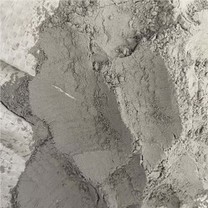
Adding an appropriate amount of water to kaolin clay can be shaped into various shapes of molds, which will not loosen or deform after drying. The plasticity of kaolin is related to the participation of the mineral composition, the degree of dispersion and the electrolyte. The relationship between dispersion and the dispersion medium is related to the particle shape and other factors. The particles are fine and the degree of dispersion is high. Good plasticity.
(2) Bonding degree and cohesive force
The cohesiveness of kaolin refers to the ability to maintain a certain mechanical strength in the air in a dry state. Cohesion refers to the ability of kaolin to accept a certain amount of barren material without losing its modeling ability, and to maintain no deformation and certain mechanical strength after drying. The cohesion and cohesion of kaolin mainly depend on the The degree of dispersion of the clay material". The higher the degree of dispersion. The greater the degree of adhesion and cohesion.
(3) Adsorption
Kaolin adsorption refers to the adsorption capacity of kaolin to various gases and liquids. This ability is related to the clay material and the degree of co-dispersion. Kaolin is somewhat absorbent, but not as large as other clay minerals.
(4) Suspension
Adding excess water to kaolin will appear in a suspended state and form a relatively stable suspension. Different substances have different effects on the suspension. Generally, caustic soda and weak alkali metal salts play a role in dilution, while sulfate and chloride salts play a role in coagulation. Kaolin suspensions are less stable than many highly dispersed clays. Therefore, agglomeration material can be added to make kaolin agglomerate to achieve the purpose of selection.
(5) Sinterability and fire resistance
The property of kaolin to become dense and hard after calcination is called sinterability. The temperature at which Shangling clay is sintered from the soil to the maximum density, that is, to obtain a small porosity, is called the sintering temperature. The level of sintering temperature is one of the important indicators to determine the variety of ceramics. The property of kaolin to resist high temperature without softening (melting) is called refractory. The temperature at which Kaolin changes from sintering to melting is called refractoriness. The refractoriness of Kaolin is 1750~1790℃. The physical and chemical process of kaolin from adobe to sintering is as follows: when the adobe is heated from 100~110℃ to 400℃, it loses adsorbed water; when it is 400~600℃, it loses crystal water; when it is 600~900℃, it loses structural water. At this time, when there is carbonate, CO2 is precipitated, and when there is sulfate, SO2 is precipitated, and at the same time, it is burned out, and metakaolinite is formed after the structure water is removed; at 950~1200 °C, mullite is formed, and it begins to sinter into hard product. The temperature interval from sintering to melting of kaolin is about 350~450℃, that is, it will not melt until 1550~1650℃.
(6) Firing shrinkage
The volume change of the air-dried kaolin adobe after roasting is called the firing shrinkage rate, which is generally 3% to 20%, which is smaller than the shrinkage rate of various clays with higher plasticity.
In addition, kaolin also has good insulation and chemical stability.